
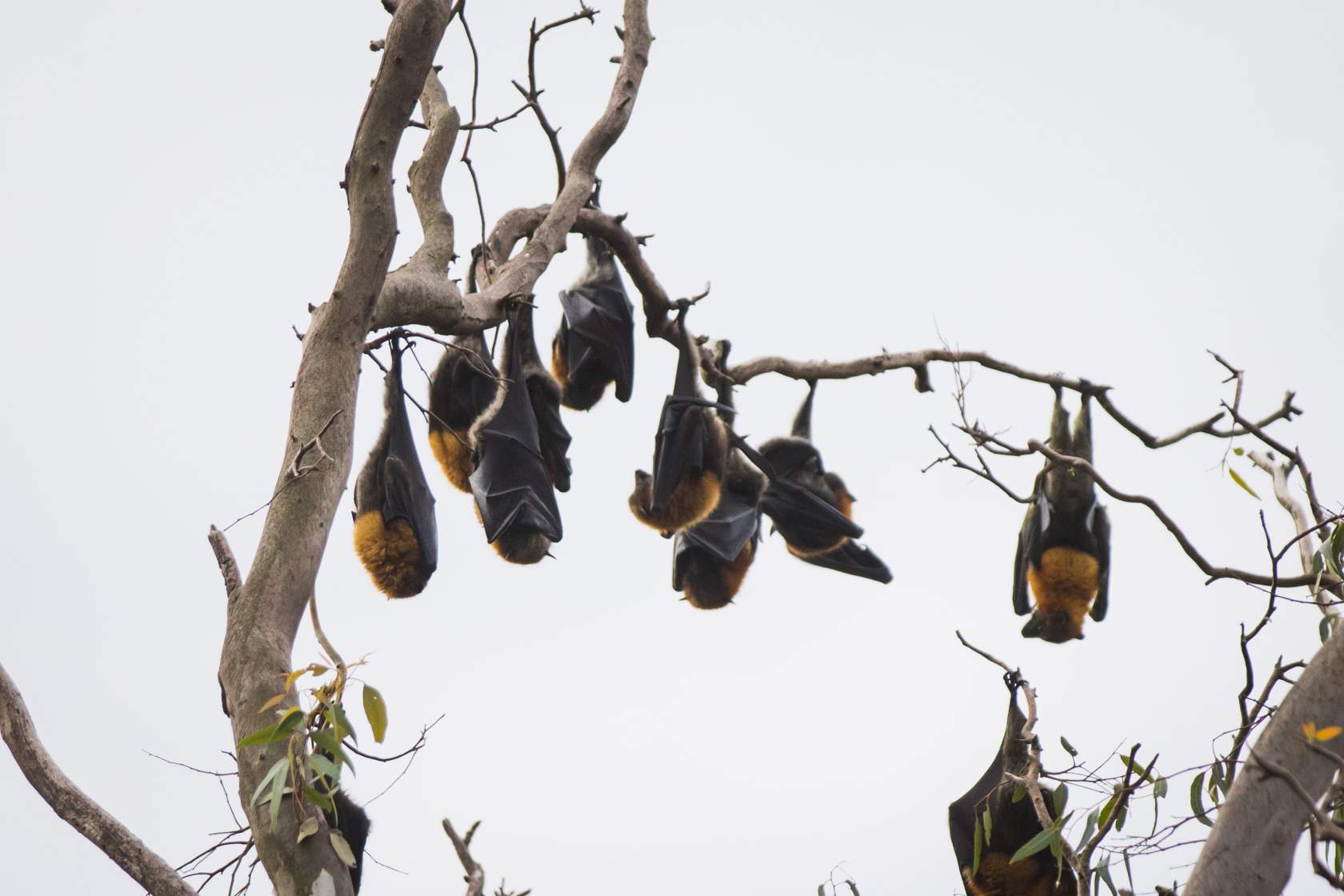
Wildlife Victoria monitors grey-headed flying fox camps during catastrophic heatwave
In response to the extreme heatwave sweeping the state, Wildlife Victoria has been deployed to grey-headed flying fox colonies in central Victoria.
Grey-headed flying foxes are a threatened species and among the most vulnerable to heat events. At temperatures above 38 degrees, flying foxes struggle to regulate their body temperature, leading to dehydration and heat stress. Temperatures exceeding 42 degrees can lead to organ failure and ultimately death.
Heat events like this are incredibly dangerous and without intervention, the impact could be catastrophic for flying fox colonies.
Wildlife Victoria volunteers, veterinarians and support staff arrived in central Victoria on Saturday for a seven-day deployment monitoring grey-headed flying fox camps in Tatura and Numurkah – two nationally important colonies. Both colonies are estimated to home approximately 10,000 grey-headed flying foxes.
The deployment is the latest in a series of operational responses from Wildlife Victoria, with volunteers and veterinary teams working in the field over recent weeks to assist bushfire-impacted wildlife in shelters and through field assessment teams. The organisation also deployed teams to grey-headed flying fox colonies across Melbourne during the 7–9 January heatwave.
“We’re working in collaboration with the state government, councils, and the community to save the lives of these precious native animals. Our team of operations and veterinary staff arrived on Saturday and will remain on site for seven consecutive days of extreme heat to monitor the health of the colonies and to provide immediate assistance when needed.
We’re pleased to report that both colonies have coped well so far, but we expect today to be the most challenging, with temperatures in Tatura and Numurkah forecast to reach 42 and 43 degrees respectively. Conditions are also expected to worsen later in the week as animals experience the cumulative impacts of consecutive days of extreme heat.
I also want to commend the hardworking local volunteers who have been closely monitoring these two camps since the start of summer. Working alongside them makes me incredibly proud, and I'm thrilled to be able to offer additional support and some level of reprieve.” Lisa Palma, Wildlife Victoria CEO
In addition to Wildlife Victoria’s grey-headed flying fox response, the charity is expecting a surge of calls to its 24/7 Wildlife Emergency Response Service relating to heat-stressed wildlife.
“Right now, we are solely focused on wildlife welfare. We are extremely busy responding to reports of sick, injured and orphaned wildlife, animals affected by bushfires, and grey-headed flying foxes under extreme duress. We will provide updates to our supporters as we are able but ask for patience as we navigate the coming days and weeks.” Lisa Palma, Wildlife Victoria CEO
If you encounter sick, injured, orphaned or heat-affected wildlife, please call Wildlife Victoria's 24/7 Emergency Response Service on 03 8400 7300.